
WHAT REMAINS AFTER MEMORY FAILS?
[visuals]
WHAT REMAINS AFTER MEMORY FAILS?
[visuals]
WHAT REMAINS AFTER MEMORY FAILS?
[visuals]

Released in 2022, Aftersun explores memory as something fragmented rather than cohesive. The film is structured around a recollection of a shared holiday, revisited years later through partial images, gestures, and moments that resist narrative clarity. Instead of reconstructing the past, Charlotte Wells allows it to remain incomplete. Events are not explained, emotions are not named, and meaning emerges through absence as much as presence.
The camera observes quietly, often holding on moments that feel unresolved. Conversations trail off, silences linger, and repetition replaces progression. This approach positions memory as subjective and unstable, shaped by distance rather than certainty. The film does not guide interpretation, nor does it provide emotional closure. It asks the viewer to remain with uncertainty, mirroring the way memory itself operates over time.
By avoiding exposition, Aftersun reframes storytelling as an act of attention. Small gestures carry disproportionate weight, and ordinary moments become charged through repetition and delay. The past is not presented as something to be understood, but something to be revisited without resolution. In doing so, the film resists nostalgia, treating memory not as comfort, but as a space where meaning remains suspended and unresolved.
Released in 2022, Aftersun explores memory as something fragmented rather than cohesive. The film is structured around a recollection of a shared holiday, revisited years later through partial images, gestures, and moments that resist narrative clarity. Instead of reconstructing the past, Charlotte Wells allows it to remain incomplete. Events are not explained, emotions are not named, and meaning emerges through absence as much as presence.
The camera observes quietly, often holding on moments that feel unresolved. Conversations trail off, silences linger, and repetition replaces progression. This approach positions memory as subjective and unstable, shaped by distance rather than certainty. The film does not guide interpretation, nor does it provide emotional closure. It asks the viewer to remain with uncertainty, mirroring the way memory itself operates over time.
By avoiding exposition, Aftersun reframes storytelling as an act of attention. Small gestures carry disproportionate weight, and ordinary moments become charged through repetition and delay. The past is not presented as something to be understood, but something to be revisited without resolution. In doing so, the film resists nostalgia, treating memory not as comfort, but as a space where meaning remains suspended and unresolved.
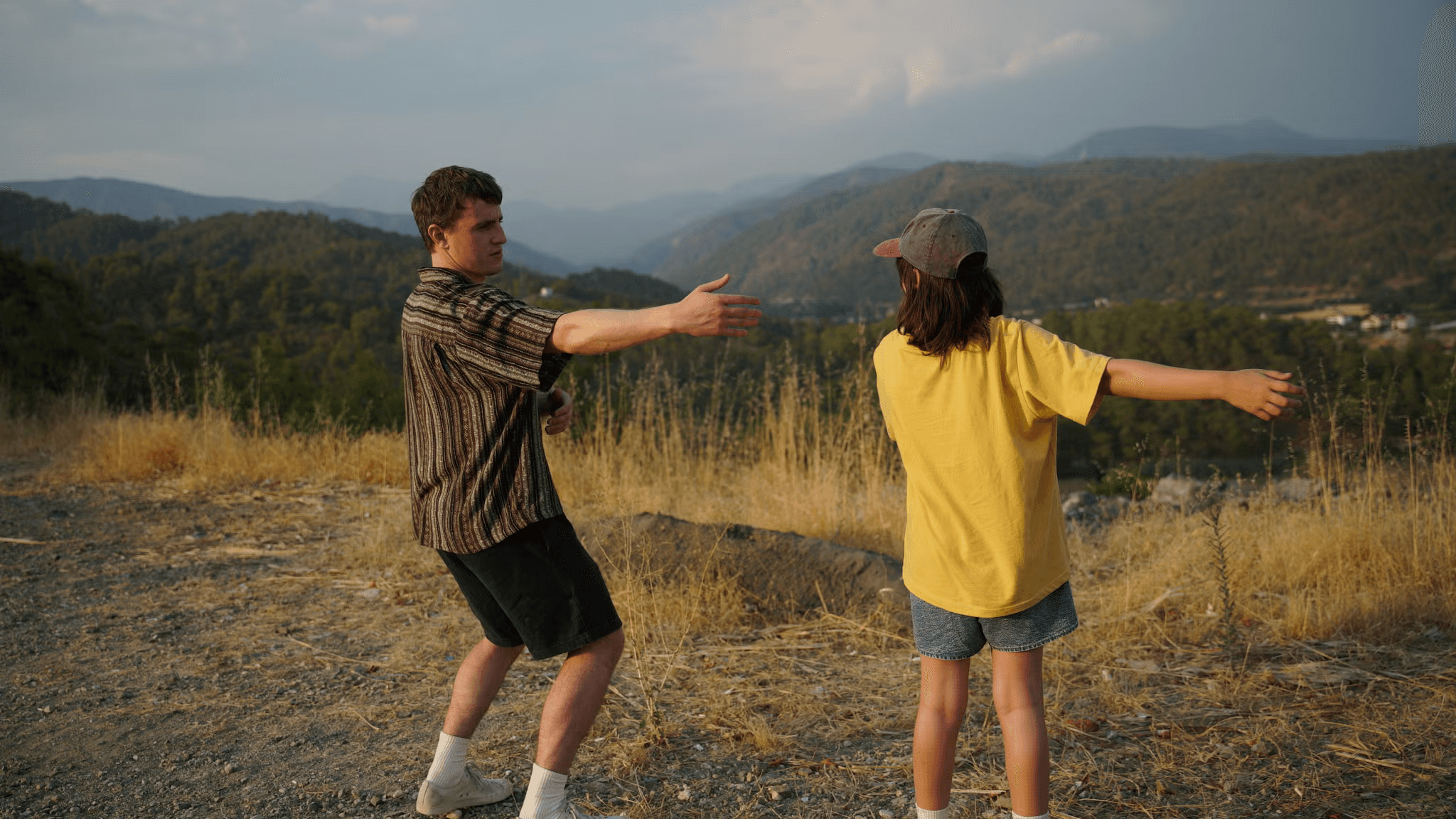
This restraint allows Aftersun to function less as a narrative and more as an emotional afterimage. The film’s structure encourages return rather than completion, with meaning shifting subtly depending on perspective and time. Each viewing reframes earlier moments, revealing how memory reorganizes itself long after events have passed. The film does not change, but the viewer’s relationship to it does.
In contrast to contemporary cinema that prioritizes explanation and emotional clarity, Aftersun embraces ambiguity as a structural choice. Silence becomes expressive, and distance becomes a tool rather than a limitation. The absence of explicit meaning allows the viewer to inhabit the film rather than decode it. Emotional understanding arrives indirectly, shaped by proximity and reflection.
This approach gives the film its lasting resonance. Rather than resolving its emotional core, Aftersun preserves it. Memory remains open, fragile, and incomplete. The film suggests that some experiences cannot be fully recovered or explained, only revisited from different angles. Its relevance lies in this refusal to clarify, positioning cinema as a space where uncertainty is not resolved, but held with care and attention.
This restraint allows Aftersun to function less as a narrative and more as an emotional afterimage. The film’s structure encourages return rather than completion, with meaning shifting subtly depending on perspective and time. Each viewing reframes earlier moments, revealing how memory reorganizes itself long after events have passed. The film does not change, but the viewer’s relationship to it does.
In contrast to contemporary cinema that prioritizes explanation and emotional clarity, Aftersun embraces ambiguity as a structural choice. Silence becomes expressive, and distance becomes a tool rather than a limitation. The absence of explicit meaning allows the viewer to inhabit the film rather than decode it. Emotional understanding arrives indirectly, shaped by proximity and reflection.
This approach gives the film its lasting resonance. Rather than resolving its emotional core, Aftersun preserves it. Memory remains open, fragile, and incomplete. The film suggests that some experiences cannot be fully recovered or explained, only revisited from different angles. Its relevance lies in this refusal to clarify, positioning cinema as a space where uncertainty is not resolved, but held with care and attention.



Aftersun suggests that memory is not something we retrieve intact, but something we approach through fragments. Meaning forms slowly, shaped by distance and repetition. The film reminds us that understanding does not always arrive through clarity, but through patience and the willingness to stay with what remains unresolved.
Aftersun suggests that memory is not something we retrieve intact, but something we approach through fragments. Meaning forms slowly, shaped by distance and repetition. The film reminds us that understanding does not always arrive through clarity, but through patience and the willingness to stay with what remains unresolved.
“I wanted the film to feel like memory itself.”
Charlotte Wells
stay in the loop
Have work you’d like to share? Mondauge is open to artists and creators interested in contributing music, film, visual work, or writing within an editorial and cultural framework.
contact Us
stay in the loop
Have work you’d like to share? Mondauge is open to artists and creators interested in contributing music, film, visual work, or writing within an editorial and cultural framework.
contact Us
stay in the loop
Have work you’d like to share? Mondauge is open to artists and creators interested in contributing music, film, visual work, or writing within an editorial and cultural framework.